
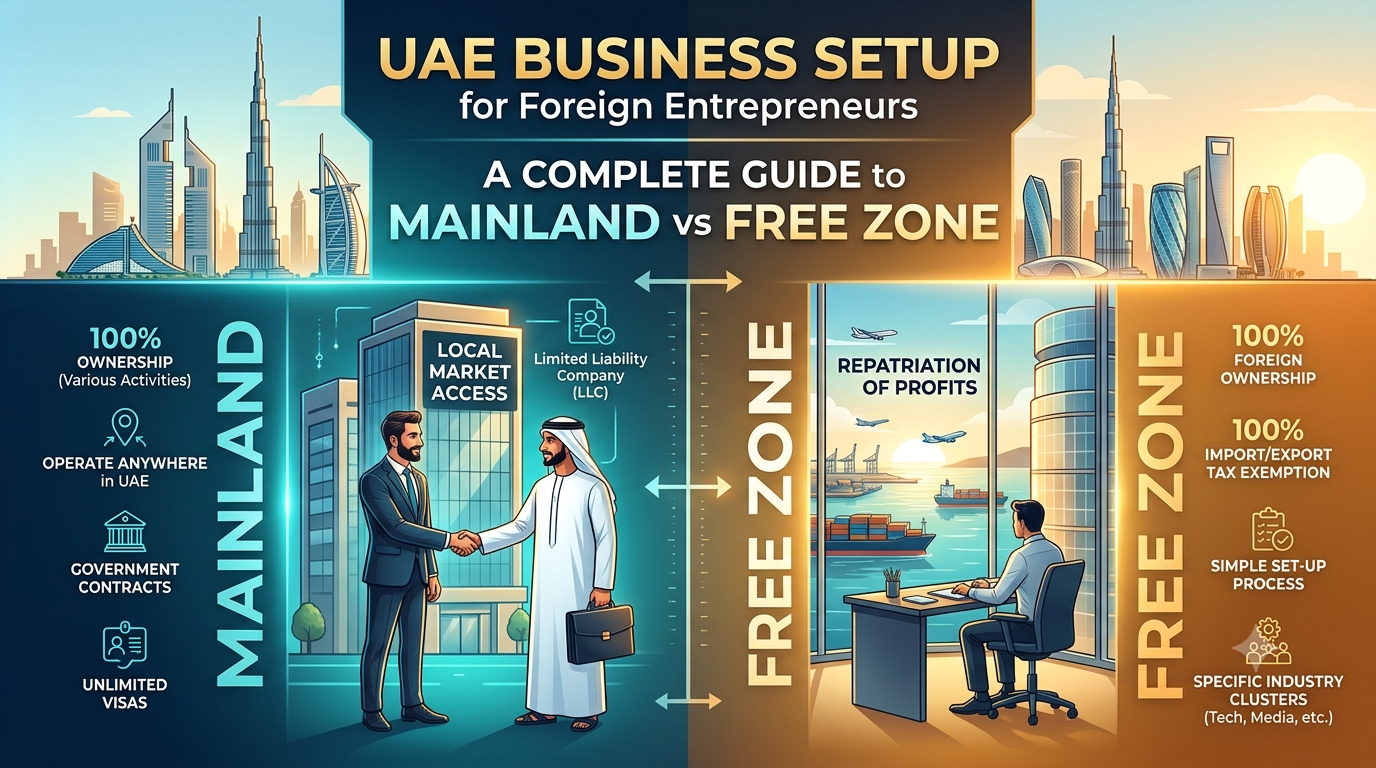
The United Arab Emirates (UAE) has become an important destination for entrepreneurs looking to establish businesses, serve international customers and explore new markets. Dubai, in particular, attracts interest from business owners across sectors such as consulting, technology, trading, e-commerce and professional services.
However, starting a business in the UAE requires more than selecting a company name and applying for a licence. Entrepreneurs need to understand the intended business activity, available company structures, licensing authority, documentation and operational requirements.
One of the first decisions is whether a mainland or free zone company structure may be suitable for the proposed business.
This guide explains the main considerations involved in UAE business setup, the differences between mainland and free zone companies, and the steps foreign entrepreneurs should investigate before proceeding.
1. Understanding UAE Business Setup
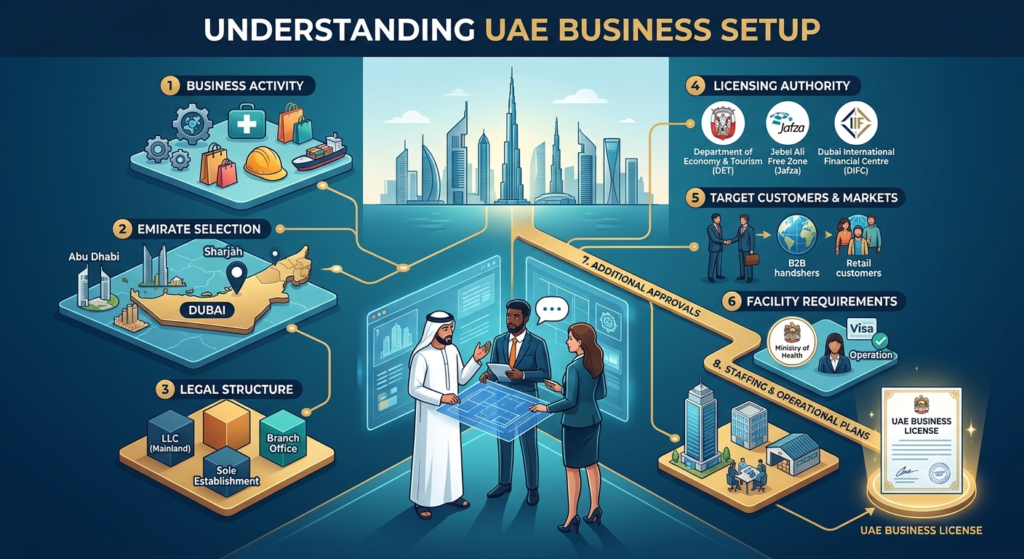
UAE business setup refers to establishing a legally registered business under the relevant licensing and regulatory authority.
The process depends on factors such as:
- The business activity you intend to conduct.
- The emirate in which you plan to establish the company.
- The appropriate legal structure.
- The applicable licensing authority.
- Your intended customers and markets.
- Office, workspace or facility requirements.
- Any additional approvals required for the activity.
- Your staffing and operational plans.
For example, a consultant serving overseas clients may have different requirements from a company importing and distributing products or a business operating a warehouse.
The right starting point is to define the business activity and operational objectives before choosing a company formation option.
The official UAE Government portal provides information about starting a business on the mainland and starting a business in a free zone.
2. What Is a Mainland Company in the UAE?
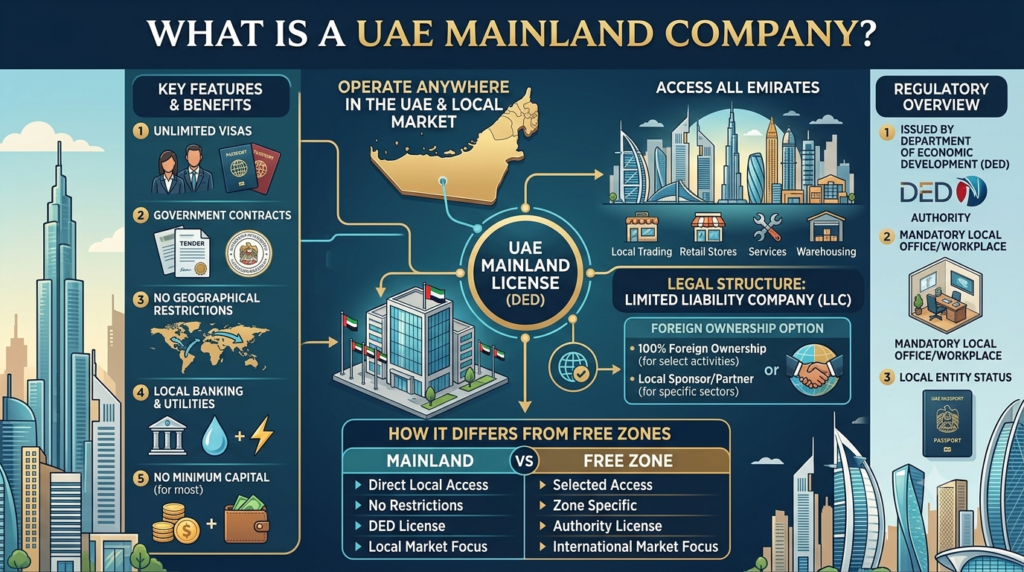
A mainland company is established under the relevant emirate’s licensing framework. In Dubai, mainland business registration and licensing are handled by the Dubai Department of Economy and Tourism (DET), subject to the applicable rules.
Mainland businesses may be suitable for entrepreneurs who want to explore opportunities in the UAE’s wider local market or conduct business activities that require a mainland licence.
Depending on the activity and applicable permissions, mainland companies may also conduct business beyond the UAE.
Potential advantages of a mainland setup
A mainland structure may be worth investigating if you:
- Intend to serve customers across the UAE.
- Plan to work with local businesses or organisations.
- Need premises outside a free zone.
- Want a company structure that supports your proposed operational model.
- Expect your business to expand into activities permitted under the relevant mainland licence.
The suitability of a mainland company depends on the activity, licensing conditions and operational requirements.
What should entrepreneurs check?
Before choosing a mainland setup, investigate:
- Whether the proposed business activity is permitted.
- The applicable legal form.
- Trade name availability and approval.
- Licence and registration requirements.
- Premises and tenancy requirements, where applicable.
- Additional approvals from relevant authorities.
- The applicable fees and renewal obligations.
Foreign investors can own 100% of many mainland businesses in the UAE, but ownership and licensing conditions vary by activity. Certain strategic or regulated activities may be subject to additional restrictions or approvals.
Do not assume that every business activity follows the same ownership or licensing rules.
3. What Is a Free Zone Company in the UAE?
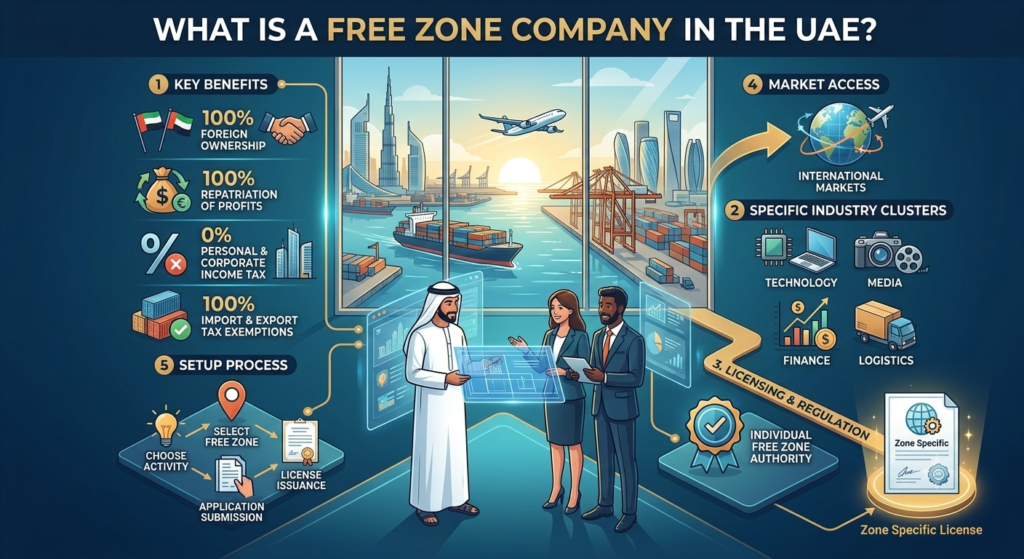
A free zone is a designated business jurisdiction with its own company registration and licensing framework.
Different UAE free zones cater to different sectors and business models. Depending on the jurisdiction, facilities may support technology, media, trading, logistics, consulting, manufacturing and other activities.
Examples of UAE free zones include Dubai Multi Commodities Centre (DMCC), Dubai Internet City, Jebel Ali Free Zone and Sharjah Media City.
Each free zone has its own permitted activities, company structures, application requirements and service arrangements.
Potential advantages of a free zone setup
A free zone may be worth investigating if you:
- Intend to operate in a sector supported by a particular free zone.
- Want to establish a business within that jurisdiction.
- Need office, co-working, warehouse or other facilities offered by the zone.
- Plan to conduct international trade or provide permitted services to overseas customers.
- Prefer a registration process and company structure offered by a specific free zone authority.
The facilities and benefits available differ between free zones. Entrepreneurs should compare actual requirements rather than assume that every free zone offers identical arrangements.
What should entrepreneurs check?
Before selecting a free zone, investigate:
- Whether the free zone permits your intended business activity.
- Available legal entity types.
- Licence categories and conditions.
- Office or workspace requirements.
- Shareholder and documentation requirements.
- Visa eligibility and any relevant facility limits.
- Renewal fees and ongoing compliance obligations.
- Rules governing business conducted outside the free zone.
Important: A free zone licence does not automatically permit every form of business activity throughout the UAE mainland. The applicable rules depend on the activity, jurisdiction and permissions required. If your business intends to serve mainland customers directly, verify the current requirements with the relevant authority before proceeding.
The UAE Government’s official guide to running a business in a free zone explains relevant operating considerations.
4. UAE Mainland vs Free Zone: Key Differences
The choice between mainland and free zone company formation should be based on your business objectives, not simply on a general claim that one option is cheaper or better.
| Consideration | Mainland company | Free zone company |
|---|---|---|
| Registration authority | Relevant emirate’s mainland licensing authority | Selected free zone authority |
| Business activity | Subject to mainland licensing and activity rules | Must be permitted by the selected free zone |
| Market access | May support wider UAE mainland operations, subject to the licence and applicable rules | Mainland activities may require additional arrangements or permissions |
| Company structure | Depends on the activity and applicable legal requirements | Depends on the free zone’s permitted entity types |
| Workspace | Depends on the licence and relevant premises requirements | Depends on the free zone’s facilities and licence conditions |
| Setup cost | Varies by activity, legal form, premises and approvals | Varies by free zone, licence, facilities and additional requirements |
| Visa arrangements | Subject to applicable company, immigration and establishment requirements | Subject to applicable free zone, immigration and establishment requirements |
| Additional approvals | May be required for regulated activities | May be required for regulated activities |
This comparison is a general guide. The actual requirements must be verified with the authority responsible for your intended business activity.
Which option should you choose?
Consider a mainland setup if your proposed operations require a mainland licence or your intended market and operating model make it suitable.
Consider a free zone if your intended activity is supported by a suitable free zone and its facilities, permissions and cost structure meet your business requirements.
Neither option is automatically the right choice for every entrepreneur.
The most useful comparison considers your business activity, intended customers, operational needs, budget and future plans together.
5. How to Choose the Right Business Activity
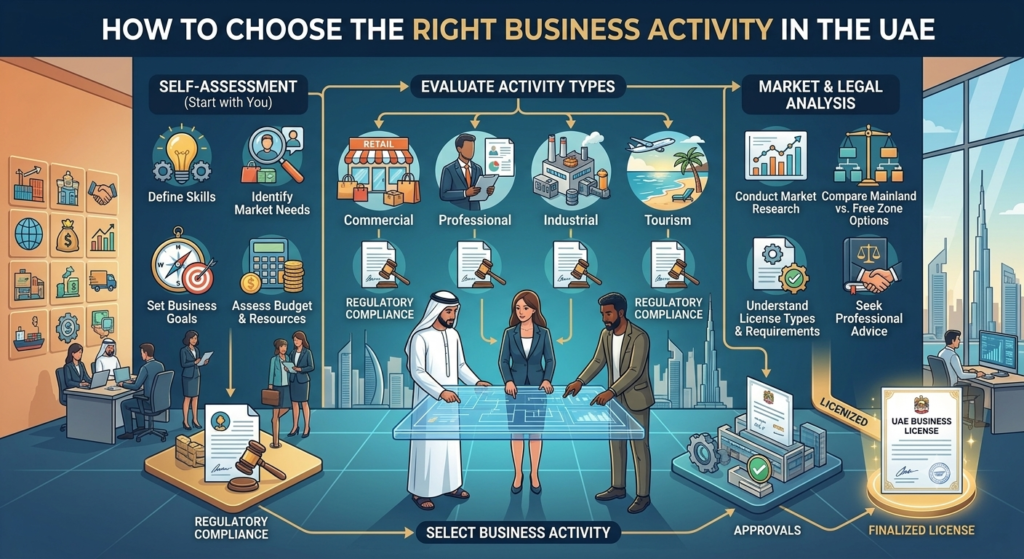
Selecting the correct business activity is one of the most important early decisions in UAE company formation.
The activity determines which licensing authority and licence category may apply. It can also affect the legal structure, supporting documentation, premises requirements and additional approvals.
Before proceeding, prepare a clear description of what the company will actually do.
For example, consider whether the business will:
- Sell physical products.
- Import or export goods.
- Provide professional consulting.
- Offer digital or technology services.
- Conduct e-commerce activities.
- Provide specialised or regulated services.
- Manufacture, store or distribute products.
These examples are not interchangeable. A business may need specific activities or approvals based on its actual operations.
Questions to answer before applying
- What products or services will the business offer?
- Who will its customers be?
- Where will the business operate?
- Will it trade locally, internationally or both?
- Does the activity require a professional, commercial, industrial or other licence?
- Are any additional approvals necessary?
Defining these details before selecting a company formation package can help reduce the risk of choosing an unsuitable activity or licence.
6. Documents Required for UAE Company Formation
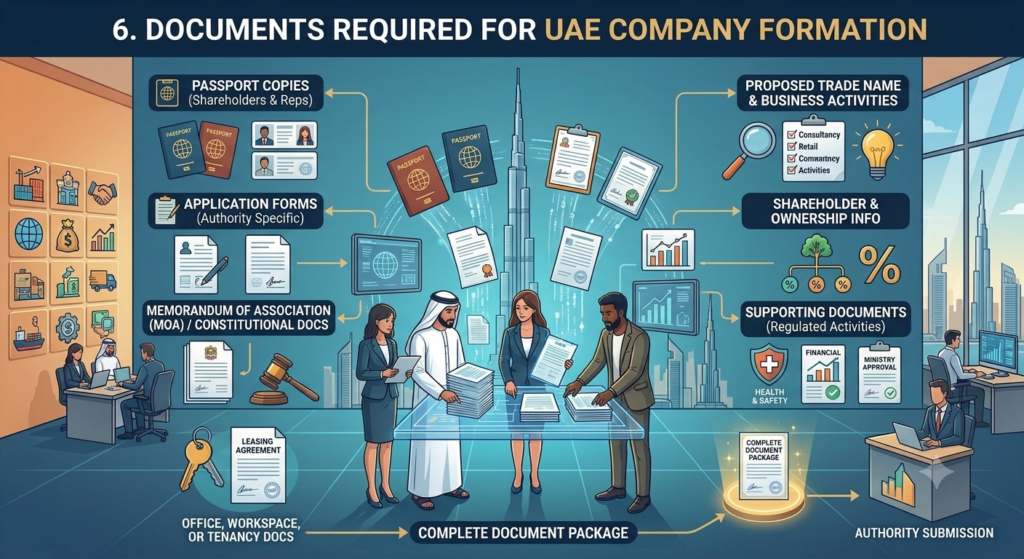
The documents required for company registration depend on the licensing authority, legal structure, activity and individual circumstances.
Entrepreneurs may be asked to provide some of the following:
- Passport copies of shareholders and authorised representatives.
- Proposed company or trade name.
- Details of the intended business activities.
- Application forms required by the authority.
- Shareholder and ownership information.
- Supporting documents relevant to the selected legal structure.
- Memorandum of Association or other constitutional documents, where applicable.
- Office, workspace or tenancy documentation, where required.
- Additional approvals or supporting documents for regulated activities.
Existing companies establishing a branch or corporate shareholders participating in a new entity may face additional documentation requirements.
Documents may also need to meet specific formatting, certification, attestation or translation requirements.
This is a general preparation checklist, not a definitive document list. Confirm the current requirements with the relevant mainland authority or free zone before submitting an application.
7. Steps Involved in Setting Up a Business in the UAE
Although the exact procedure varies, entrepreneurs can use the following framework to prepare for company formation.
Step 1: Define your business objectives
Clarify the products or services you intend to offer, your target customers, the markets you plan to serve and the way the business will operate.
Step 2: Identify the appropriate business activity
Determine the activity that accurately reflects your proposed operations and investigate its licensing conditions.
Step 3: Compare mainland and free zone options
Evaluate the jurisdictions that permit your intended activity. Compare their requirements, facilities, costs and operational conditions.
Step 4: Select the legal structure
Choose a company structure permitted by the relevant authority and suitable for the ownership and operating arrangements.
Step 5: Check the proposed trade name
Confirm that the proposed name meets the authority’s requirements and is available for registration.
Step 6: Prepare the required documentation
Collect the relevant shareholder, identity, company and supporting documents. Check whether any approvals or formalities must be completed before submission.
Step 7: Complete the required applications
Submit the application and supporting documents through the appropriate authority or its authorised process.
Step 8: Arrange the required premises and approvals
Meet the relevant office, facility and additional approval requirements applicable to the activity and jurisdiction.
Step 9: Obtain the business licence
After the relevant authority approves the application and the applicable requirements are satisfied, the company can obtain its licence.
Step 10: Review post-registration obligations
Company formation is not the end of the process. Depending on the business, additional steps may involve immigration and establishment procedures, banking, tax registration, accounting, employment compliance and licence renewals.
The precise order of these steps can vary. Some activities or jurisdictions may require additional stages, and some procedures may be completed together.
For current requirements, consult the official UAE Government mainland business setup guide and free zone business setup guide.
8. How Much Does It Cost to Set Up a Business in the UAE?
There is no single business setup price that applies to every entrepreneur.
The overall cost depends on the emirate, licensing authority, activity, legal structure, office or facility requirements and additional services.
Potential cost components include:
- Initial registration and application fees.
- Business licence fees.
- Trade name and related administrative charges.
- Office or workspace costs.
- Required external approvals.
- Immigration and establishment-related charges, where applicable.
- Visa-related costs, where applicable.
- Professional services and documentation expenses.
- Annual licence renewal and ongoing compliance costs.
A package advertised at a particular price may cover only selected components. It may not include every service, government charge, visa expense or recurring cost.
How to compare business setup quotations
When comparing quotations, ask for a written breakdown showing:
- The proposed licensing authority and jurisdiction.
- The permitted business activities.
- The legal structure included.
- The licence and registration charges.
- The facilities or workspace included.
- Any visa-related services and exclusions.
- Additional government or third-party charges.
- Annual renewal costs and other recurring obligations.
A transparent comparison helps entrepreneurs evaluate the overall financial commitment rather than focusing only on the initial advertised price.
9. Can Foreign Entrepreneurs Own a UAE Business?

Foreign entrepreneurs can establish businesses in the UAE, subject to the applicable legal, licensing and regulatory requirements.
The UAE permits 100% foreign ownership for many mainland business activities. Free zones also offer foreign ownership arrangements within their respective legal and licensing frameworks.
However, the precise position depends on the activity, jurisdiction and company structure.
Before proceeding, verify:
- Whether the intended activity permits the proposed ownership arrangement.
- Whether any sector-specific restrictions apply.
- Which legal structure is available.
- Whether additional approvals are required.
- What documentation shareholders must provide.
Ownership, company registration, residence permissions and the right to conduct a particular activity are separate considerations. Entrepreneurs should not assume that registering a company automatically resolves every immigration or operational requirement.
10. Business Setup and UAE Residence Visas: What to Understand
Entrepreneurs often consider company formation alongside their plans to live or work in the UAE.
However, business registration and residence arrangements are not the same process.
Whether a company owner, shareholder or employee can obtain a residence visa depends on the applicable immigration rules, eligibility requirements, company arrangements and relevant approvals.
Before including visa costs in a business plan, verify:
- Whether the selected company structure supports the intended application.
- Which visa category may be relevant.
- What eligibility and documentation requirements apply.
- Whether the business or licensing authority imposes specific conditions.
- What additional fees and procedures may be involved.
Do not assume that every business licence automatically guarantees a residence visa or that every setup package includes visa-related services.
11. Common Mistakes to Avoid When Planning UAE Business Setup
Choosing a jurisdiction based only on price
A low initial fee may not reflect the total cost of operating and renewing the business. Compare the full requirements and recurring expenses.
Selecting an unsuitable business activity
The selected activity must accurately reflect the proposed operations. Check the applicable licensing conditions before applying.
Assuming all free zones offer the same benefits
Free zones differ in their permitted activities, facilities, company structures and fees. Compare the actual requirements of the relevant jurisdictions.
Overlooking mainland market access rules
If your business intends to sell goods or services directly in the UAE mainland market, check the permissions and arrangements applicable to the chosen structure.
Underestimating documentation requirements
Missing documents, incorrect information or unmet approval requirements can delay an application. Confirm the latest checklist before submitting.
Ignoring ongoing compliance
Registration is only one part of operating a business. Consider renewals, accounting, taxation, employment obligations and other requirements applicable to your circumstances.
Relying on outdated information
Fees, procedures and regulatory requirements may change. Use current official sources and obtain confirmation from the relevant authority before making financial commitments.
12. How Skyline Tech Immigrations Can Help
Choosing a company formation route involves several connected decisions. Entrepreneurs need to understand their business objectives, suitable activities, available registration options, licensing requirements and documentation before deciding how to proceed.
Skyline Tech Immigrations provides guidance to help entrepreneurs understand UAE business setup considerations and prepare for the relevant process.
Depending on your requirements, discussions may cover:
- Understanding your proposed business activities.
- Exploring mainland and free zone formation options.
- Identifying relevant licensing considerations.
- Understanding documentation and application stages.
- Reviewing the steps that may be required before proceeding.
Our objective is to help you approach the process with greater clarity and make informed decisions based on your circumstances.
Planning to establish a business in the UAE?
Visit our UAE Business Setup service page to learn more about the guidance available and discuss your business objectives with Skyline Tech Immigrations.
Explore UAE Business Setup Services
Frequently Asked Questions
1. Can a foreigner start a business in the UAE?
Yes. Foreign entrepreneurs can establish businesses in the UAE, subject to the relevant licensing, ownership and regulatory requirements. The suitable structure depends on the intended activity and jurisdiction.
2. What is the difference between a mainland and a free zone company?
A mainland company is licensed under the relevant emirate’s mainland framework. A free zone company is registered under a specific free zone authority. Their permitted activities, market access arrangements, facilities and requirements can differ.
3. Is a free zone company always cheaper than a mainland company?
No. Costs depend on the business activity, jurisdiction, licence, facilities, additional approvals and ongoing expenses. Compare complete quotations rather than relying on general price claims.
4. What documents are required to register a UAE company?
Requirements vary. Commonly requested documents may include passport copies, shareholder details, a proposed trade name, application forms and supporting documents relevant to the legal structure. The relevant authority should confirm the definitive checklist.
5. Does registering a company automatically provide a UAE residence visa?
No. Company registration and residence visa eligibility are separate matters. Visa availability depends on the applicable immigration requirements, company arrangements and necessary approvals.
6. How long does UAE company formation take?
The timeframe varies according to the licensing authority, activity, completeness of documentation, premises requirements and any additional approvals. Confirm the expected timeline with the relevant authority before making commitments.
7. How can I choose the right UAE business setup option?
Start by defining your business activity, intended customers, operating model and budget. Then compare the permitted activities, legal structures, costs and requirements of suitable mainland authorities or free zones.
Final Thoughts
UAE business setup can open opportunities for entrepreneurs, but selecting the right company formation route requires careful preparation.
Understanding the intended activity, comparing mainland and free zone options, preparing documentation and checking current licensing requirements can help you approach the process more confidently.
Rather than choosing a setup package based only on price, evaluate how well the proposed structure supports your business objectives and long-term plans.
Your business journey starts with informed decisions.
Disclaimer
This article is intended for general informational purposes only and does not constitute legal, financial, tax or immigration advice. Requirements, fees, procedures and eligibility conditions may change and vary according to the activity, jurisdiction and individual circumstances. Company registration, licensing and visa decisions remain subject to the relevant authorities and their applicable requirements. Verify current information with the appropriate official authorities before making decisions or financial commitments.